
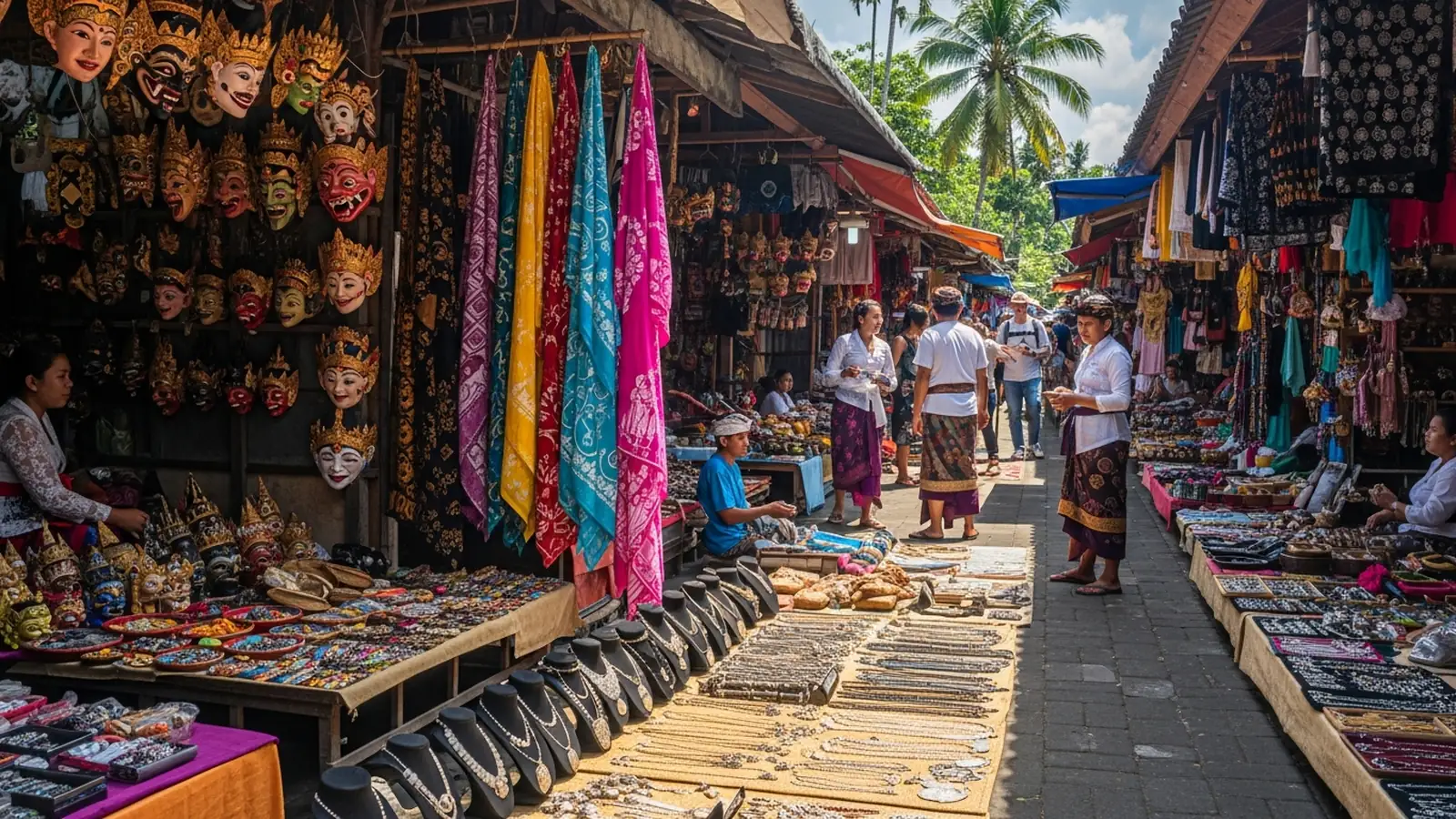
 Ubud · Gianyar · Bali Crafts
Discover What to Bring Back from Bali
Explore authentic Balinese souvenirs from Ubud, Gianyar, and beyond. From hand-carved wood to intricate silver jewelry, find the perfect memento of your Bali adventure.
What type of souvenir are you looking for?
Let us help you find the perfect Balinese souvenir.
When you visit Bali, you step into an island renowned for its rich artistic traditions and vibrant culture. Tourists are not only drawn to its stunning landscapes but also to its thriving artisan markets. With tourism contributing around 80% of Bali’s economy, your purchases have a significant impact. From bustling markets in Ubud to high-end galleries in Seminyak, the island offers a diverse range of products that reflect its unique heritage. Here’s an expert guide on what to bring back from Bali to ensure your souvenirs are authentic, legal, and memorable.
Batik Textiles: A Touch of Tradition
Authentic batik from Bali and Java is a must-have. This traditional fabric is hand-drawn or hand-stamped using a wax-resist dyeing technique. The process is intricate, resulting in unique patterns that highlight the artisan’s skill. High-quality batik is priced significantly above mass-printed imitations, starting from IDR 150,000, but prices can vary widely. When purchasing batik, look for pieces that showcase complex designs and rich colours.
Learn more about artisan products in our guide.
Remember, higher-end pieces might be found in designer boutiques in Seminyak or Ubud, where prices can reach hundreds of US dollars. Always verify the authenticity of your batik, as the market is flooded with cheaper prints.
Indonesia’s official tourism site offers more insights on traditional crafts.
Wood Carvings: Masterpieces from Mas
Balinese wood carvings are renowned worldwide, particularly those from the village of Mas, near Ubud. These carvings range from small, affordable figurines priced around IDR 50,000 to large, expensive sculptures that can cost significantly more. Each piece is hand-carved, often depicting Hindu deities, animals, or abstract designs. When buying, consider the size and intricacy of the carving. Larger sculptures may require special shipping arrangements.
Explore more Bali souvenirs here.
Keep in mind that Ubud is a prime location for arts and crafts, with numerous galleries and shops offering a wide selection. Ensure that your chosen item complies with export regulations, especially if it involves protected materials.
Silver Jewelry: Craftsmanship in Celuk
The village of Celuk is Bali’s hub for silver jewelry. Here, family-run workshops produce exquisite rings, necklaces, and other items. Prices can start at IDR 100,000 for simpler designs, rising significantly for intricate pieces. When purchasing silver, inquire about the purity and craftsmanship. Many workshops offer custom designs, which can be a unique souvenir or gift.
Our comprehensive guides provide additional tips for buying silver in Bali.
Bargaining is common in tourist areas, so don’t hesitate to negotiate. However, verify the authenticity of the silver to avoid counterfeit products.
The CBI’s market information offers further guidance on purchasing silver jewelry.
Bali’s Local Snacks: A Taste of the Island
Bringing back local snacks is a delightful way to share Bali’s flavours with friends and family. Popular choices include packaged coffee, tea, and spices, which are generally allowed through customs in reasonable quantities. Balinese kopi luwak, marketed as one of the world’s most expensive coffees, is a unique find. Expect to pay a premium for authentic, ethically sourced beans. For more on Balinese food products, visit our About page.
Confirm customs regulations for food items with your home country to avoid issues. Prices for snacks vary but are often quite affordable, making them perfect for gifts.
Check Indonesian customs regulations for more information.
Religious Artifacts: Respectful Souvenirs
Bali’s predominant Hindu culture is reflected in its religious artifacts. Items such as prayer beads, small shrines, or statues of Hindu deities are widely available. Prices start at IDR 50,000 for small items. However, be aware of export regulations concerning cultural property. Buying genuinely old temple carvings or artifacts can be illegal. For legal purchases, stick to modern reproductions.
Our guides offer tips on navigating religious artifact purchases.
Ensure that any religious items you buy respect local customs and are not classified as protected cultural heritage.
Textiles and Garments: Functional Keepsakes
Traditional Balinese textiles, including sarongs, are not only beautiful but functional. Often required attire for temple visits, they make practical souvenirs. Prices for sarongs can start around IDR 50,000, depending on the material and design. When buying textiles, consider their origin and craftsmanship.
Discover more about Bali souvenirs to enhance your shopping experience.
Ensure the textiles are legally exportable, especially if they incorporate rare materials. The rainy season, from November to March, might affect your market shopping, so plan accordingly.
Natural Remedies: Wellness from Bali
Bali is known for its holistic approach to wellness, and you can bring a piece of this back with natural remedies. Essential oils, herbal teas, and traditional Balinese herbal concoctions, known as “jamu,” are popular choices. Essential oils such as frangipani or sandalwood are great for aromatherapy, with prices typically starting at IDR 70,000 per small bottle. Jamu, made from turmeric, ginger, and other local ingredients, is believed to have health benefits and can be found in powder or liquid form. When purchasing, ensure that products are properly labeled and sealed to maintain their quality.
Discover more about Bali’s wellness offerings to make informed purchases.
Art and Paintings: Capturing Bali’s Spirit
Bali’s art scene is vibrant, with many local artists offering pieces that capture the island’s spirit. From traditional Balinese paintings to contemporary art, there’s something for every taste. Ubud is particularly famous for its art galleries, where you can find works ranging from IDR 100,000 to several million, depending on the artist and complexity. Consider the size of the piece and your ability to transport it back home, as larger canvases may require special handling.
Explore more about Bali’s art scene and find the perfect piece to adorn your walls.
Legal Considerations and Travel Tips
Before purchasing souvenirs, familiarize yourself with legal restrictions. Items made from protected wildlife or certain natural materials may be confiscated. Liquid products must comply with airline regulations, typically limited to 100 ml per container for cabin baggage.
IATA’s travel centre provides detailed airline guidelines.
Cash is still widely used in local markets, so carry enough Indonesian rupiah (IDR) for small stalls. Credit cards are accepted in larger shops, but be cautious of counterfeit goods, which are common in tourist areas.
Contact us for more travel tips and ensure a smooth shopping experience in Bali.
Ready to explore Bali’s vibrant markets and bring home a piece of its culture? From intricate wood carvings to authentic batik, our expert guide ensures you make informed and meaningful purchases. For personalized advice or further inquiries, get in touch with us today.